Digital readiness: more than a connection
What does it take to be digitally ready? Stories from Nigeria, Uganda, Mexico and the Netherlands show why access, skills and safety need to go hand in hand.

“If you don’t see a letter on time, or haven’t completed a payment on time, then there’s a problem.”
Coralina said this during our digital inclusion pilot in the Netherlands. For most of us, a letter in our inbox is a small thing. For someone who isn’t online, or doesn’t feel sure of themselves there, it can turn into a fine, a missed appointment or a benefit that never arrives.
Around 6 billion people use the internet today. That still leaves 2.2 billion people offline, according to the ITU. But stories like Coralina’s show that closing the gap takes more than a cell tower or a new laptop. A connection opens a door. Digital readiness is what helps people walk through it.
More than a connection
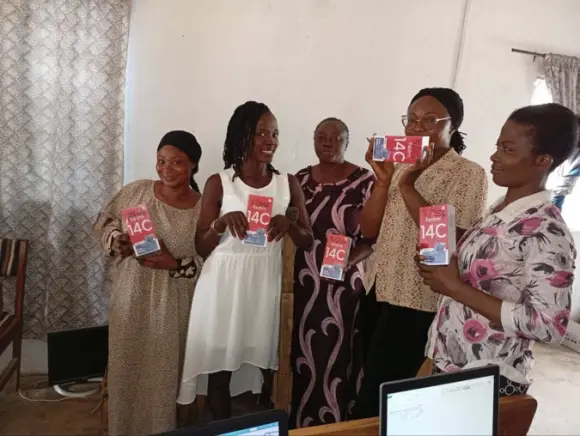
In rural Nigeria, women farmers and traders are the backbone of their local economies. Yet many of them have never owned a smartphone, let alone used one to manage their money. When our partner Fantsuam Foundation set out to change that for 50 of these women, it quickly became clear that a signal alone wouldn’t do it.
First, the women needed a device they could afford, so Fantsuam acted as guarantor to help them buy their own phones. Then came the skills: browsing, sending messages, and using a banking app. Along the way, they learned how to move around online safely. And with every session, something less visible grew too: the confidence to try things on their own.
That combination is what we mean by digital readiness. It’s having affordable access, the skills to use it, the knowledge to stay safe, and the confidence to keep going without needing someone else’s help every time. These are also the foundations of our three program lines: affordable connectivity, basic digital capabilities, and safe internet use.
What readiness looks like depends on where you are. A trader in rural Nigeria needs something different from a parent in Groningen. That’s why there’s no one-size-fits-all solution, and why we work with local partners who know their communities best.
Why it matters
More and more of daily life happens online. Homework, job applications, banking, health appointments and government letters increasingly assume you’re connected, and that you know what to do once you are.
But the digital divide follows familiar lines. In 2025, 85% of people in cities were online, compared with 58% in rural areas. In low-income countries, only 23% of people use the internet, against 94% in high-income countries. And women are still less likely to be online than men. The people with the most to gain from going online are often the least ready to do so.
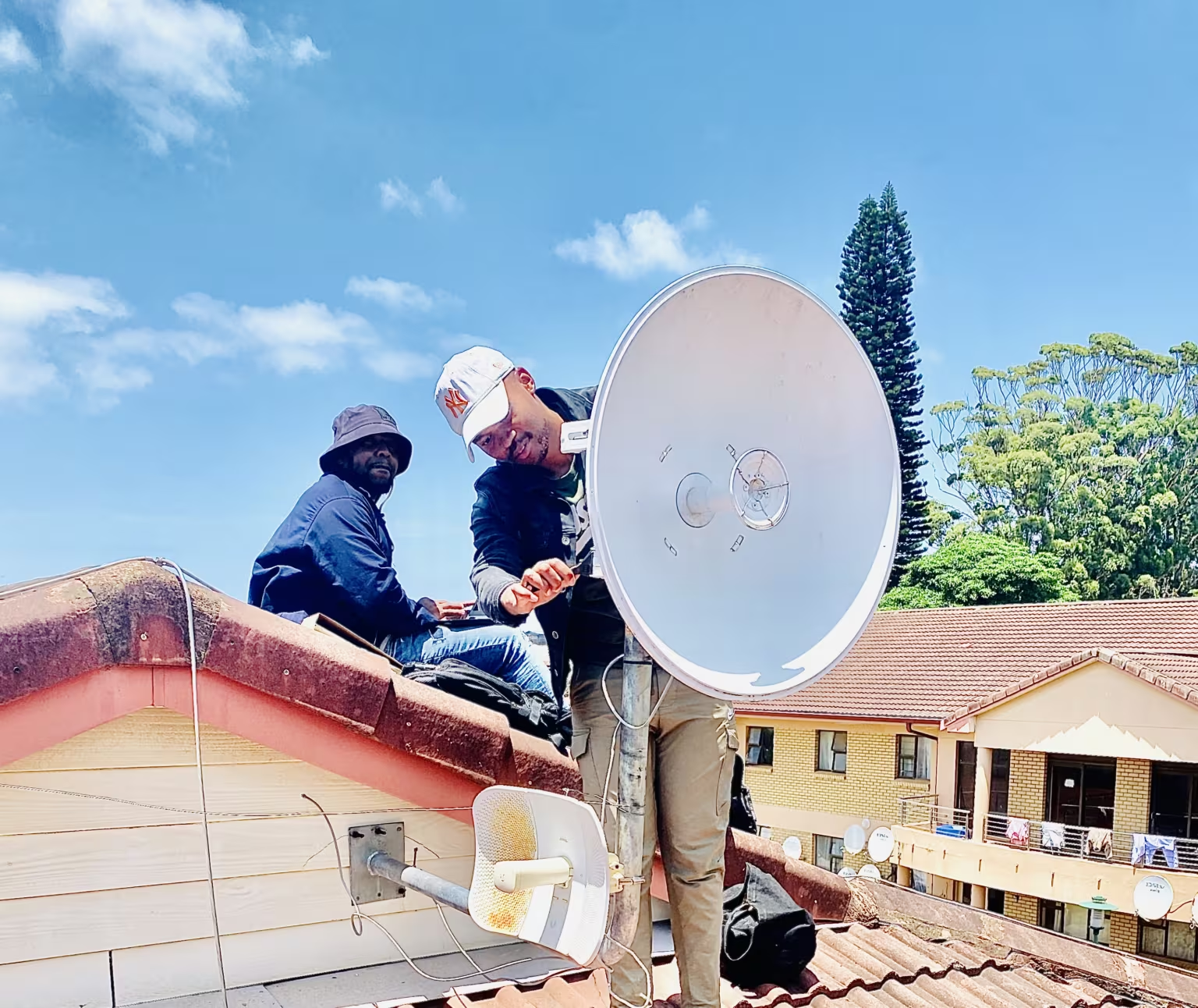
Take the rural schools of Chiapas, in southern Mexico. Until recently, students there were cut off from the online resources their peers in the city take for granted. Through ConnectED Mexico, our partner The Unconnected connected 15 of these schools to high-speed internet. Spare bandwidth is resold to the surrounding communities, which keeps the network running on its own. Around 8,000 people nearby can now benefit too.
Or take Kehancha, in Kenya’s Migori County, where young people and women leaders founded Tangaza Community Based Organization. Tangaza is now setting up solar-powered digital hubs that combine affordable internet with digital skills and entrepreneurship training, aimed at women, girls and young people. The project has just started, with the goal of reaching 400 people.
Connectivity can be a great equalizer. Without digital readiness, though, it can just as easily replicate existing inequalities, or even widen them.
When you’re not ready
Not being digitally ready is rarely a choice. Back in the Netherlands, one father in our pilot summed it up in a few words: “You’re not reachable. You don’t have WhatsApp, no Zoom during Covid.” Others told us how they quietly asked relatives or neighbours to handle their online tasks, and how shame made them hide that they weren’t online. Some families had to choose between paying for internet and paying for their children’s activities.
There’s another side to being unprepared, too. People who are new to the internet are more exposed to scams, fraud, cyberbullying and grooming. In Osun State, Nigeria, a needs assessment by our partner Brain Builders Youth Development Initiative found that secondary school students are frequently exposed to online abuse, often without knowing where to turn. And when people don’t know how to stay safe, many decide not to go online at all.
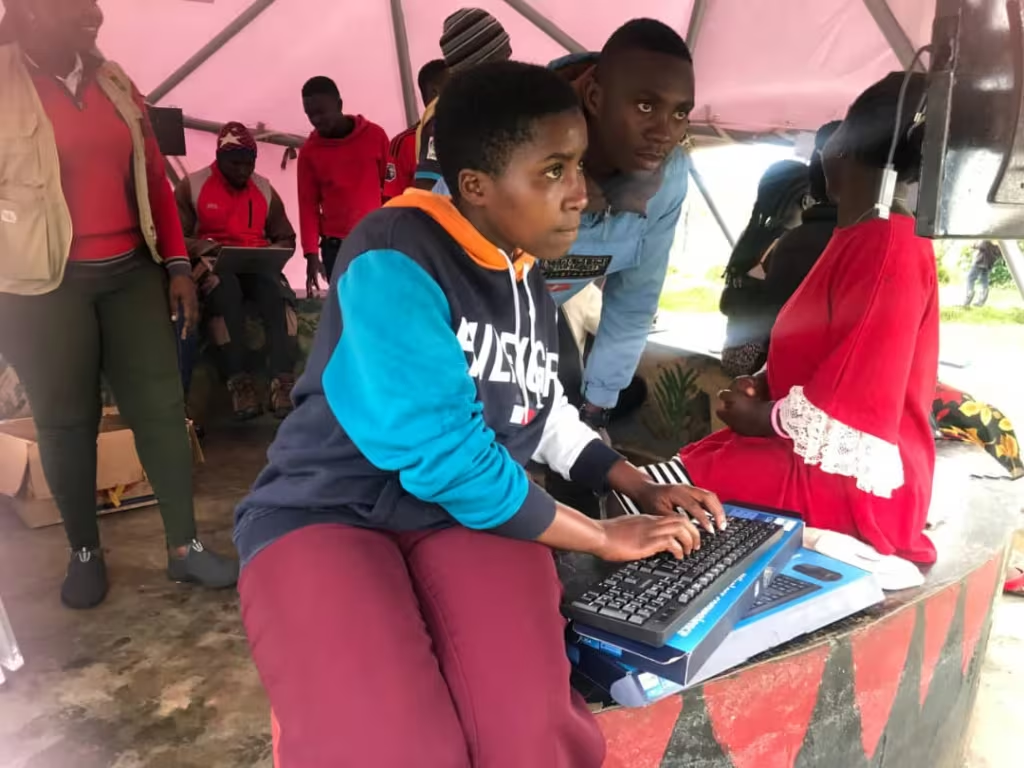
In Bidibidi Refugee Settlement in Uganda, the internet has become a lifeline for education, connection and rebuilding lives. Our partner YFTC set up three permanent digital safety hubs there. Women and young people learn about strong passwords, scams and privacy through role-plays, printed guides and storytelling in their own languages. Safety, in other words, isn’t a barrier to going online, but makes going online possible.
Readiness that spreads
The good news is that digital readiness is contagious. Once someone feels confident online, they tend to pass it on. That’s why many of our partners start with the people others already turn to for help: teachers.
In rural Uganda, Project Hello World trained more than 200 teachers, well beyond its original target. The teachers grew in skill and confidence, and they started using digital tools in their classrooms. Through them, those skills reach their students too.
In Osun State, Brain Builders is taking the same approach to online safety. By training 50 educators as “multipliers”, the project aims to reach more than 5,000 students, while also involving parents and community leaders. In Nigeria, Webfala has already trained more than 2,600 students, teachers and parents in safe and responsible internet use.
And in Bauchi State, Nigeria, Zee Tech Foundation has just started Digi Teach. The project trains 50 teachers and 50 deaf students in digital literacy, online safety and the use of AI in teaching, making sure readiness includes those who are too often left out.
The ripple effect reaches beyond classrooms. In Bidibidi, participants are expected to share what they learn with their families and neighbours. In the Netherlands, several pilot participants told us they wanted to help others in their community.
Ready, together
Digital readiness doesn’t happen overnight. It grows step by step: a first phone of your own, a first message sent, recognizing a scam, a teacher who passes on what they’ve learned. And it grows best when it’s built by and with the community itself.
Many of these stories are still being written. Projects like Digi Teach, Tangaza’s digital hubs and a new community ICT lab in Mirigu, Ghana have only just begun, and we’ll share what they achieve and learn along the way.
Get in touch
Closing the digital divide is too big a challenge for any one organization. Do you share our mission, or are you working on digital inclusion yourself? We’d love to hear from you. Get in touch or have a look at our projects.