Building digital confidence: strengthening online safety in Bidibidi Refugee Settlement
In Bidibidi Refugee Settlement, a digital safety project fosters lasting confidence in digital participation for women and youth.

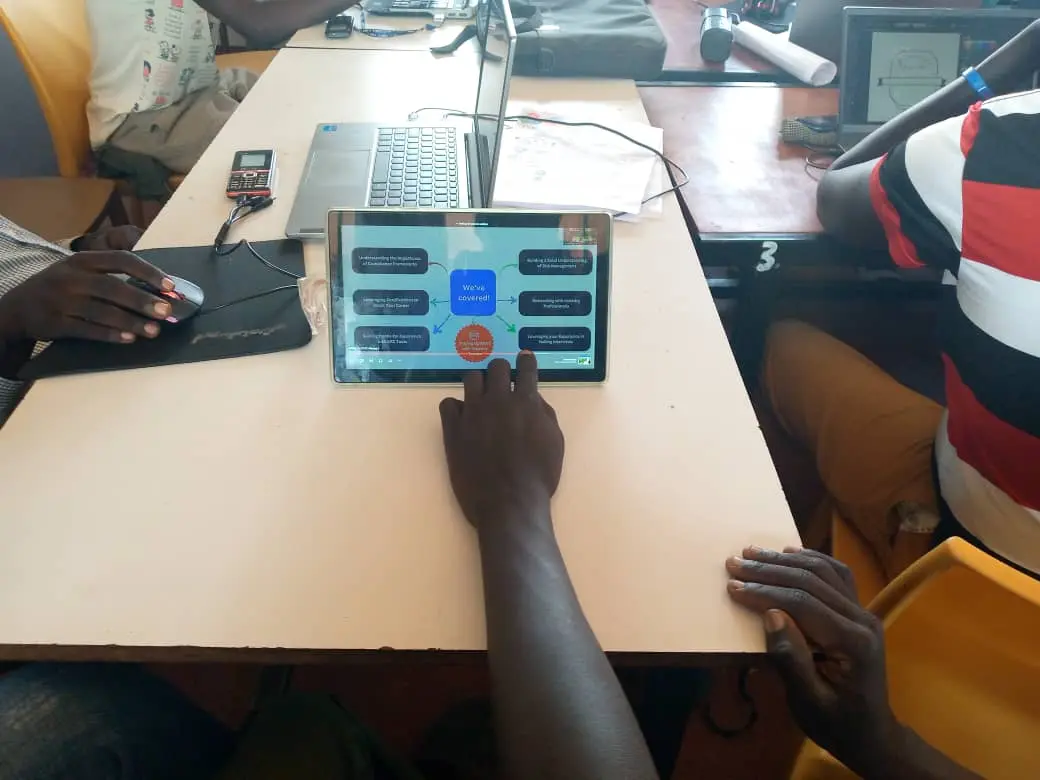
In Bidibidi Refugee Settlement, Uganda, the internet has become a bridge to opportunity. It’s a tool for education, connection, and rebuilding lives. Over the past years, many residents have taken their first steps online, thanks to the earlier digital literacy initiative supported by 48percent.org and executed by local partner Youth Focus on Transforming Communities (YFTC).
But as more people gain access, a new challenge has surfaced: how to stay safe online.
For many in Bidibidi, especially women and young people, the internet is still unfamiliar territory. Without the right knowledge, online spaces can pose real risks: from scams and data theft to cyberbullying and exposure to harmful content. Recognizing this, YFTC launched a new project focused on digital safety and security, designed to build on the foundations laid by previous digital literacy efforts.
Teaching safety through community
The project introduces something new to Bidibidi: three permanent digital safety hubs across Zones 4 and 5. These hubs will serve as local learning spaces where people can come together to practise safe internet use, access printed guides, and take part in role-plays and storytelling sessions in their own languages.
Training sessions will cover essential topics such as creating strong passwords, avoiding scams, and keeping personal information private. But beyond the lessons themselves, the hubs are designed to remain as trusted spaces for ongoing learning, mentorship, and community dialogue.
As YFTC explains, “Many people here are new to the online world and don’t know about things like strong passwords or privacy settings. We want to teach in ways that make sense locally. This happens through stories, examples, and hands-on practice.”
Empowering women and youth
Across the settlement, the demand for digital access continues to grow. Yet for many, that access comes with uncertainty. Few have had the chance to learn how to recognise online threats or how to respond when something goes wrong.
By focusing on digital safety, this project helps participants gain confidence and control over their digital lives. When people know how to protect themselves, they are more likely to use the internet to learn, communicate, and start small businesses. They can explore opportunities online without fear and with greater independence.
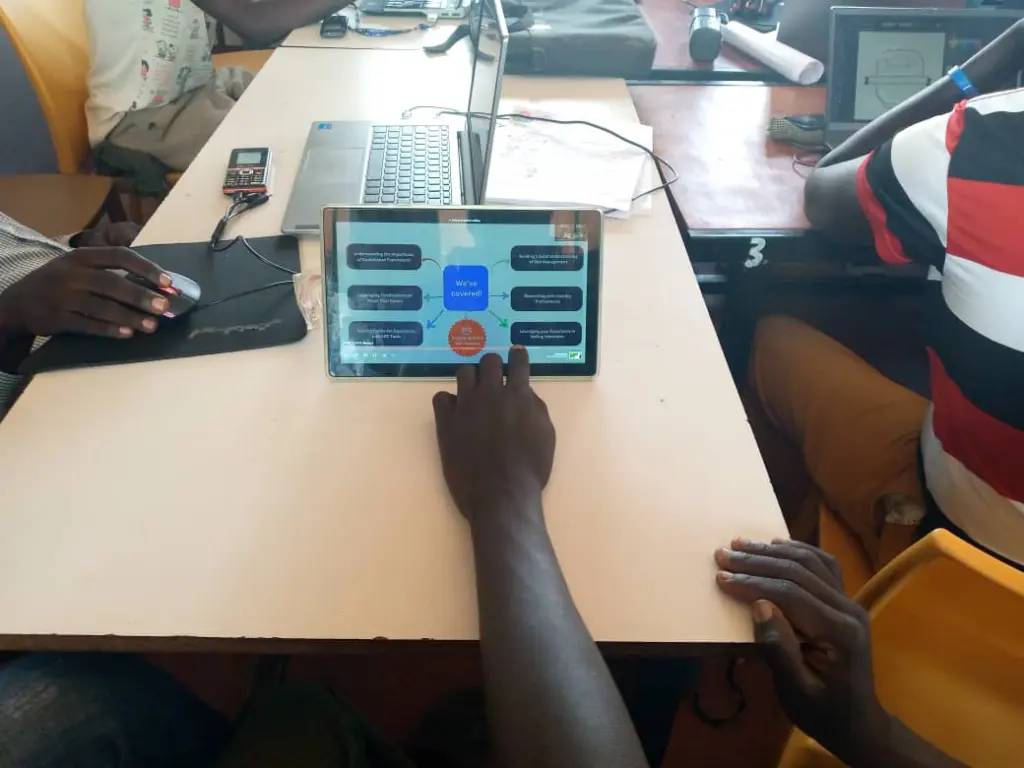
Knowledge that lasts
While this project will reach hundreds of participants directly through training and demonstrations, its real impact lies in the long term. Once participants understand how to stay safe, they become local advocates for digital responsibility. They teach friends, family, and neighbours what they’ve learned, helping safety awareness ripple outward through the community.
Digital safety also strengthens the local economy. As small business owners and traders learn to use digital tools securely, for example through managing payments, promoting products, or accessing online markets, they can engage more confidently in the digital economy.
Laying the groundwork for safe digital inclusion
Bidibidi’s story is one of resilience and continuous learning. From first gaining internet access to now learning how to use it safely, the community is taking steady steps toward digital inclusion that lasts.
This project is a step toward digital confidence, where every user, especially women and youth, can connect, learn, and grow in an environment that protects and empowers them.