Transformative digital inclusion for teachers with Project Hello World
Project Hello World will deliver digital skills training to teachers, empowering them to be digital advocates in their communities.
Status: Closed
Country: Uganda
Partner: Project Hello World
Impact goal: 200 teachers
About the project
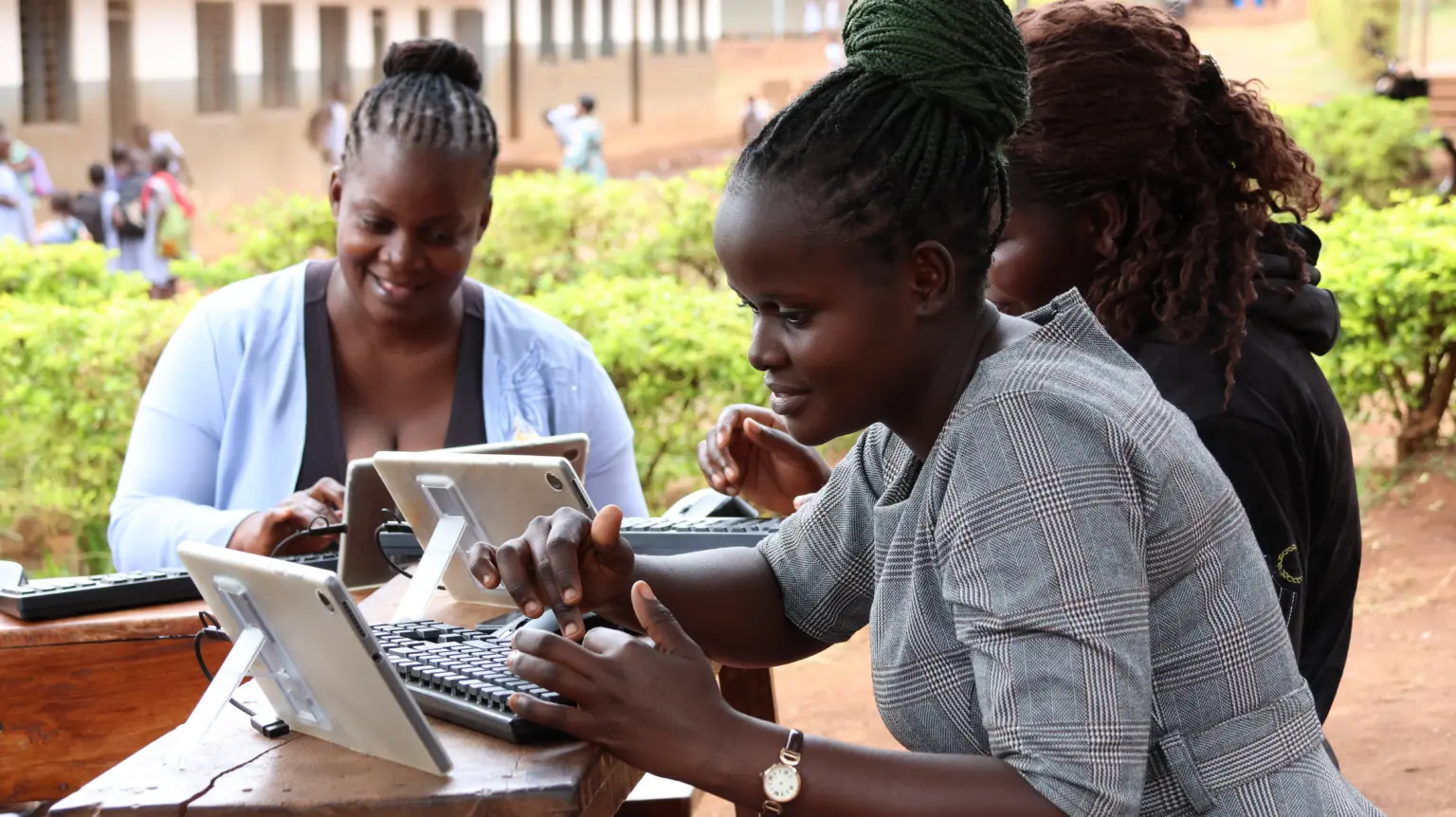
With 50 Hello Hubs located in schools, this project aims to deliver targeted digital skills training to 200 teachers in rural and marginalized communities. The training will enhance teachers' professional development, enable them to integrate digital pedagogies into their classrooms, and empower them to act as multipliers by passing on their skills to students and peers.
Results
The project set out to deliver targeted digital skills training to 200 primary school teachers in rural and marginalised communities in Uganda. By the end of the programme, it had not only achieved but slightly exceeded this target:
242 teachers enrolled across 16 Hello Hubs, with 204 completing the full training and assessments (84% completion rate). 67% of participants were women, helping address gender gaps in digital access. On average, teachers’ digital skills improved by 36%, with assessment scores rising from 28% at baseline to 62% at endline. 93% of participants improved their digital competencies, with the strongest progress in typing, using Microsoft Excel, and navigating online tools. 97% reported greater confidence in digital skills, and 98% felt confident using the Hubs after training.
The project also produced ripple effects within schools:
Teachers began integrating digital tools into lesson plans and using laptops/tablets for classroom activities. Head teachers reported stronger digital capacity for school management tasks like budgeting, reporting, and communication. Some teachers launched ICT clubs and created new opportunities for students to engage with technology.
In total, the project directly benefited 204 teachers, while hundreds of pupils and school communities indirectly benefited from teachers’ new skills, confidence, and use of digital pedagogies.
Changes and Challenges
While the results closely matched the project’s aims, several implementation challenges shaped delivery and provided valuable learning:
Irregular attendance – Teacher availability was disrupted by school holidays, family responsibilities, and domestic duties, particularly for women. More flexible scheduling and school leadership engagement will help in the future.
Teacher transfers – Some participants were reassigned to other schools before completing the programme. This limited certification tracking and highlighted the need for remote follow-up mechanisms.
Limited prior exposure – Many teachers had never used digital devices before. Early sessions had to focus on the basics (switching on devices, using a mouse, navigating apps), which slowed initial progress. A “Digital Basics” module will be added in future training.
Scheduling conflicts – Training sometimes clashed with core school duties such as exam supervision or staff meetings. Closer alignment with academic calendars and stronger school commitments will address this.
Despite these challenges, the project demonstrated that targeted training can significantly improve digital literacy among rural teachers. It also showed that empowering teachers creates meaningful ripple effects for students and schools, helping bridge the digital divide in underserved communities.
About the partner
Project Hello World is a United Kingdom based organization. Their goal is to bridge the digital divide by connecting hard-to-reach communities to online education and Wifi connectivity.
Visit their website here to learn more about them.