Embedding digital skills with Computer Aid International South Africa
30 locals in the Newlands community will be trained in embedded digital skills, aiming to increase levels of digital adoption.
Status: Closed
Country: South Africa
Partner: Computer Aid International
Impact goal: 30 people
About the project
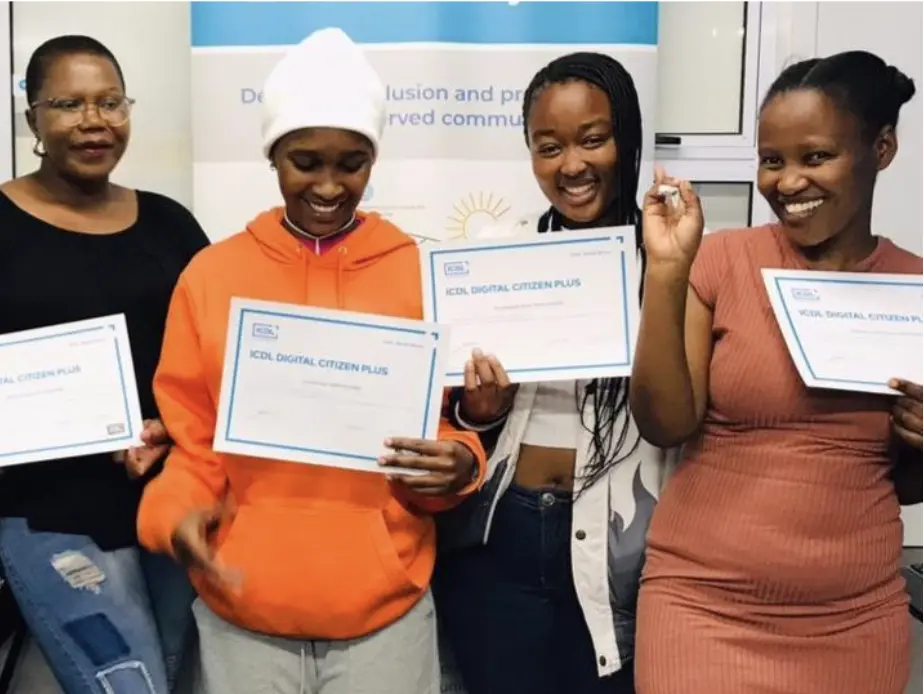
The Embedding Digital Skills project is a joint 3-6-month project by Computer Aid International South Africa and Small Projects Foundation, offering accredited and globally-recognized International Certification of Digital Literacy (ICDL) digital literacy training to 30 local beneficiaries in the underserved rural Newlands community, South Africa. The overall aim of this project is to increase levels of digital literacy and digital adoption in the Newlands community.
Results
The project successfully exceeded its core targets. A total of 30 participants took part in the training, including 20 community members and 10 SPF ambassadors. 80% of participants were women, and 86% were young people aged 18–35. All beneficiaries were from rural, underserved communities, and more than half had no prior experience using laptops or participating in formal digital literacy training. Training was delivered in three cohorts, primarily in English, with isiXhosa, the local language, used to support comprehension where needed.
Of the 30 participants, 28 completed the course, resulting in a retention rate of 93 percent, well above the original target. All 28 achieved assessment scores above the required 75 percent pass mark, and the remaining two participants are being supported to reattempt their assessments. The project demonstrated strong learning outcomes, with participants reporting increased confidence in using digital tools for everyday tasks, employment-related activities, and community services. One participant who volunteers at a local clinic reported gaining the confidence to use a computer for clinic-based work for the first time.
A key learning from the project was the ability to deliver ICDL training far more efficiently than anticipated. While similar programmes in comparable contexts typically require one to three months per cohort, this project demonstrated that with dedicated trainers and focused scheduling, the full Digital Citizen Plus course could be delivered in five intensive days per cohort. This included orientation, content delivery, and assessments. This shorter training model creates new opportunities for scaling the programme and increasing its reach.
As a result, SPF has begun exploring partnerships to expand ICDL training further. Initial discussions have led to a draft memorandum of understanding with a local TVET college to potentially deliver ICDL training to up to 400 students per year who currently lack basic digital skills. In addition, participant interest in more advanced ICDL courses exceeded expectations, suggesting potential demand for a longer-term digital skills training pathway in the community.
Challenges
One of the main challenges was the inability to include teachers as beneficiaries, as originally planned. Despite early interest, teachers were largely unavailable to commit time to the training, which is not mandatory under the Department of Education. Further investigation suggested that workload pressures, limited perceived professional benefit, and time constraints contributed to low participation. As a result, the project was extended by one month, and the beneficiary group was adjusted to include more community members.
While this shift required adaptation, it resulted in strong community uptake and increased local demand for digital literacy training. SPF has since received more inquiries about similar courses than before the project began, indicating a growing appetite for digital skills in the area. SPF plans to continue engaging schools separately to explore alternative approaches to supporting digital skills development within local education settings.
About the partner
Computer Aid International is a UK-based non-profit organization who's mission is to bridge the digital divide and to use digital technologies to help overcome disadvantages, and to do this in the most sustainable way possible. We're working with the South African branch of the organization. Visit their website here.